
Our journey begins with the
AMBASSADOR

Overview
| Model | Ambassador |
| Edition | Friends & Family |
| Movement | Automatic |
| Case material | Polished Brass / Yellow Gold Plating / Rose Gold Plating / Rhodium Plating |
Movement
| Movement | Automatic |
| Caliber | Miyota 8215 |
| Power reserve | 42 hours |
| Number of jewels | 21 |
Case
| Case material | Brass, with yellow gold, rose gold, and rhodium plating options |
| Case diameter | 38.6mm |
| Case length | 43.7mm |
| Crystal | Double dome or flat sapphire crystal with AR coating |
| Crown | Engraved water-resistant push-pull crown |
| Caseback | 316 stainless steel |
| Water resistance | 3 ATM |
| Lug width | 20mm |
Strap
| Lug width | 20mm |
| Buckle width | 18mm |
| Buckle style | Tang and clasp in matching case material |
| Strap material | Rubber or leather options available depending on preference |
Design DNA
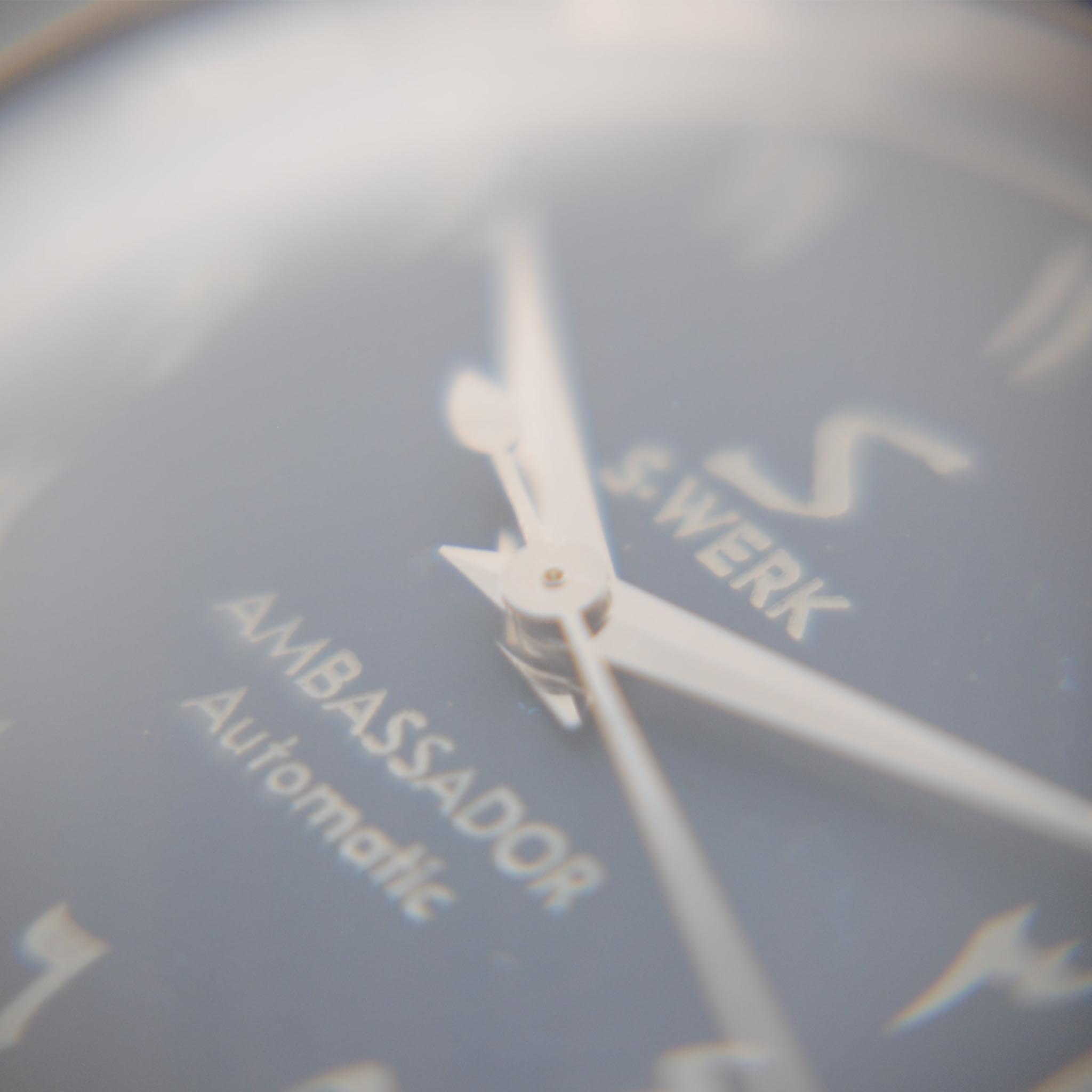
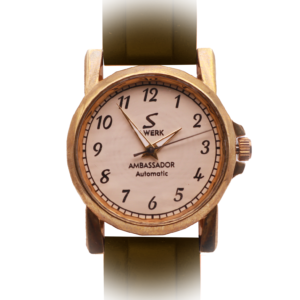
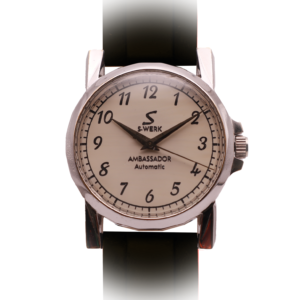
In designing the Ambassador, it was our intention to introduce appealing geometries to a otherwise utilitarian world of field watches. In it’s modest 38.5mm diameter case, the bezel is beveled to 72 equal parts to create a dancing shine when brought into light. The trapezial lugs, faceted at the top, bring harmony and elegance to an otherwise robust design.
How It Started
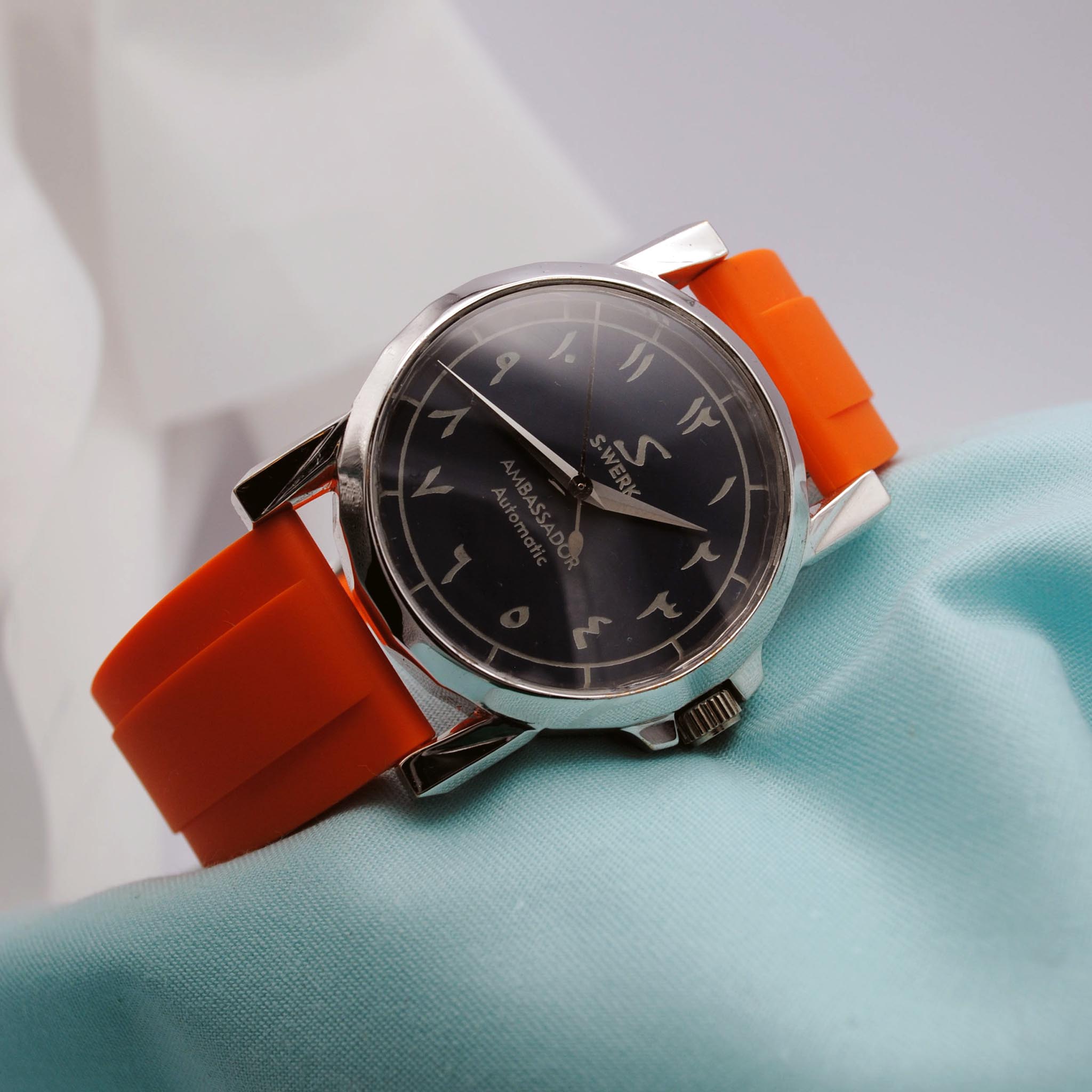
“In restoring that first watch, I was challenged with having to fit a movement into a case where mechanical movement had very little space, which caused a lot of trouble. Instead of working from the outside in, I started by designing a watch case around a movement. The Miyota 8215 was a logical choice; it was inexpensive, durable, and automatic. I was also familiar with Miyota as a movement maker, from watches I already owned and considered them then – and now – to make great calibres. It was also a movement that I knew I could easily source parts for (or replace), and I could find detailed technical drawings of. Working out of CAD, I started by building out a dummy movement that I then surrounded with a membrane that would be the movement holder. Around this movement holder, I designed a watch case that had all the hallmarks of a low-poly CAD model for 3D printing. Nevertheless, I loved the design. I believe it is heavily inspired by everyone’s – and my – favourite designer, Gerald Genta, but the slopes of the lugs and the bevelling bring something classic, grandiose, and Byzantine to the case profile. “
Ivan, on designing the Ambassador watch.
Best In Class Materials
The Ambassador line is produced from high-quality brass, in both plated, and unplated configurations that will age gracefully with wear. From the sapphire crystal protecting the dial, to the crown and case, we ensure that your watch serves as a trustworthy companion that will stand the test of time and while ticking merrily along for decades.
A Material Science Journey
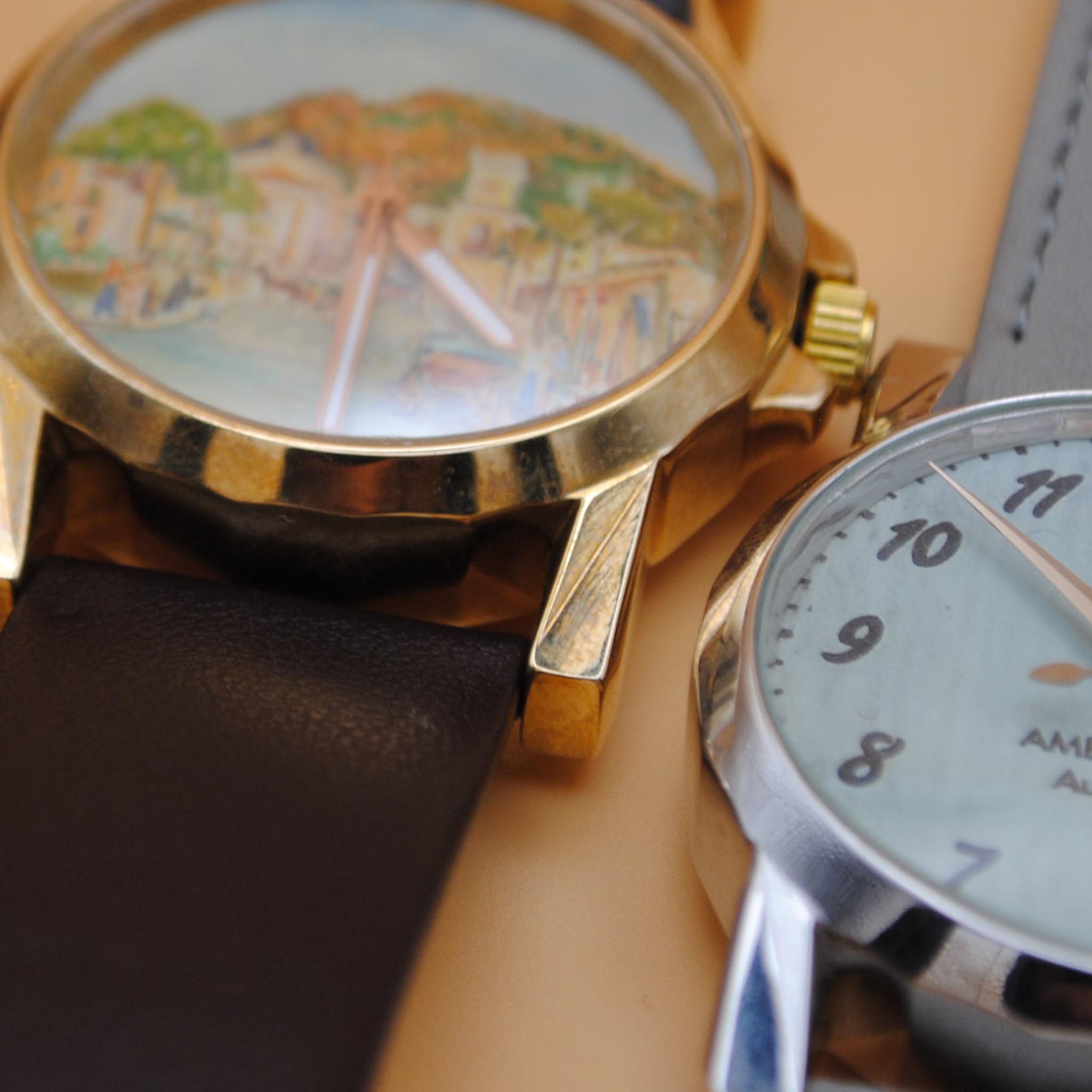
“It is now hard to believe that initially my intention was, in fact, to 3D print the watch case in ABS or PLA+, apply a conductive coating, and electroplate it. It wasn’t the best of ideas. My only experience in manufacturing was with additive applications, so I searched for partners that could facilitate laser melting or 3D printing with metal. Discovering lost-wax casting from brass was game-changing. While we made some early attempts at lost-wax casting ourselves, we lacked the know-how to reliably execute on the same tolerances that we needed. However, we were able to find a reliable manufacturing partner in France that would cast our cases and buckles to specification with the predictability that we needed. Now we use the Ambassador model as a boilerplate for experimenting with new exciting materials such as ceramic-filled polymers, resin, and lab-grown crystals.”
Ivan, on Ambassador material science.
Unique Dials
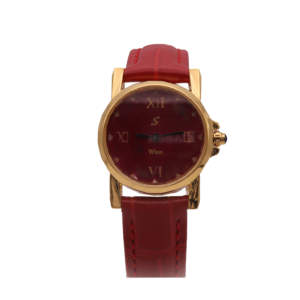
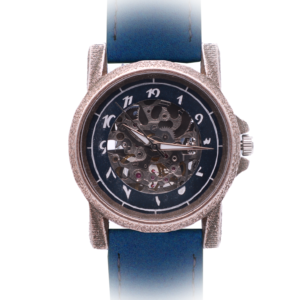
The Ambassador is equiped with magnificent hand-painted dial, which is unique in colour and finish. Each dial takes up to three weeks to produce, through an arduous and delicate process of firing a porcelain composite medium resulting in smooth, durable, and lightfast surface finish. Our artisans use a combination of modern and traditional methods for lettering and applying indexes, which are customized to the specification of the Ambassador’s final owner.
Our First Dials
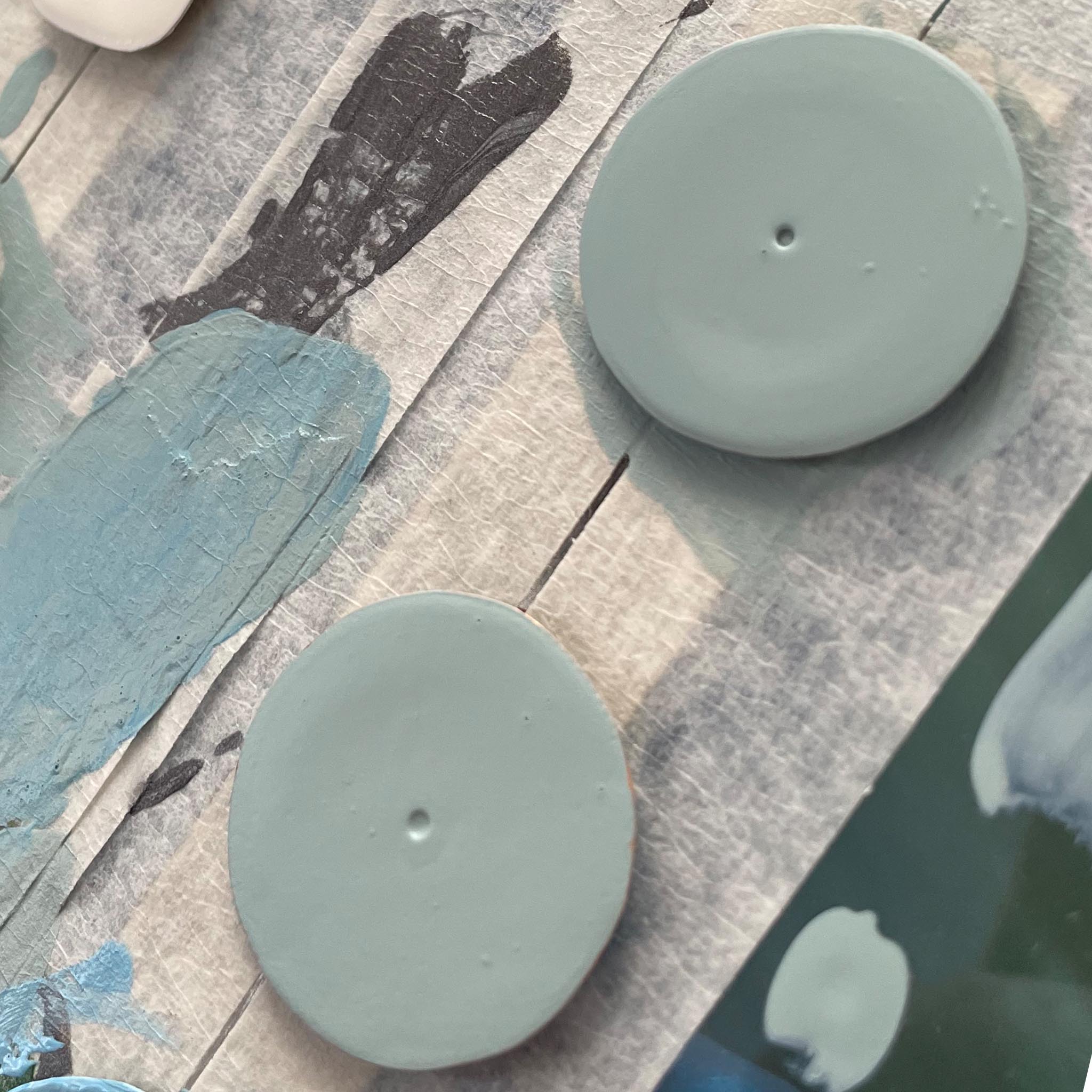
“In the early days of Strukwerk we didn’t have access to a plasma cutter. I cut every single dial by hand using aviator shears out of 0.4mm tin, and filed the edges down to make a circle. It was painstaking work, and it would take me an hour to prepare one dial blank. Porcelain also has a very high failure rate – it’s susceptible to cracking. Through the first year of R&D, dialmaking presented a big bottleneck for us. There were a lot of setbacks, cuts, bruises, but it helped us develop the process that we use today, which is far more reliable.”
Ivan, on dialmaking.
Express Your Interest
If you are interesting in owning your own Ambassador wristwatch, complete with a custom dial and bespoke details, contact us using this form to get in touch.